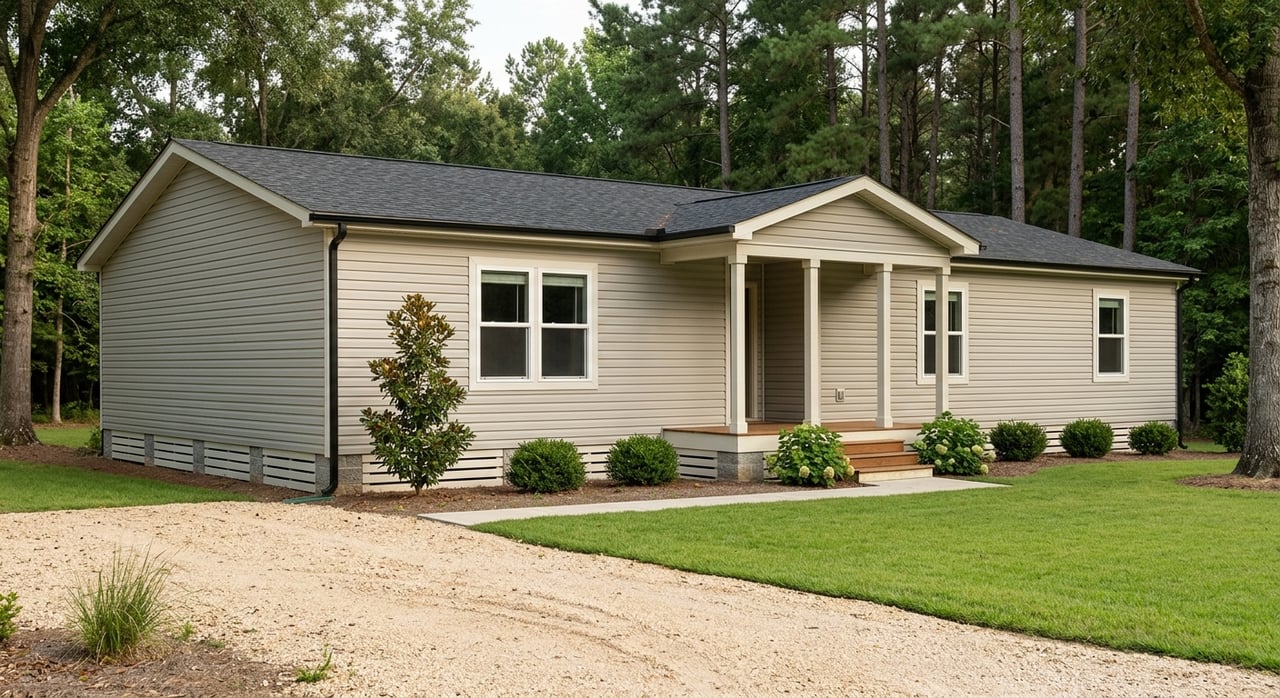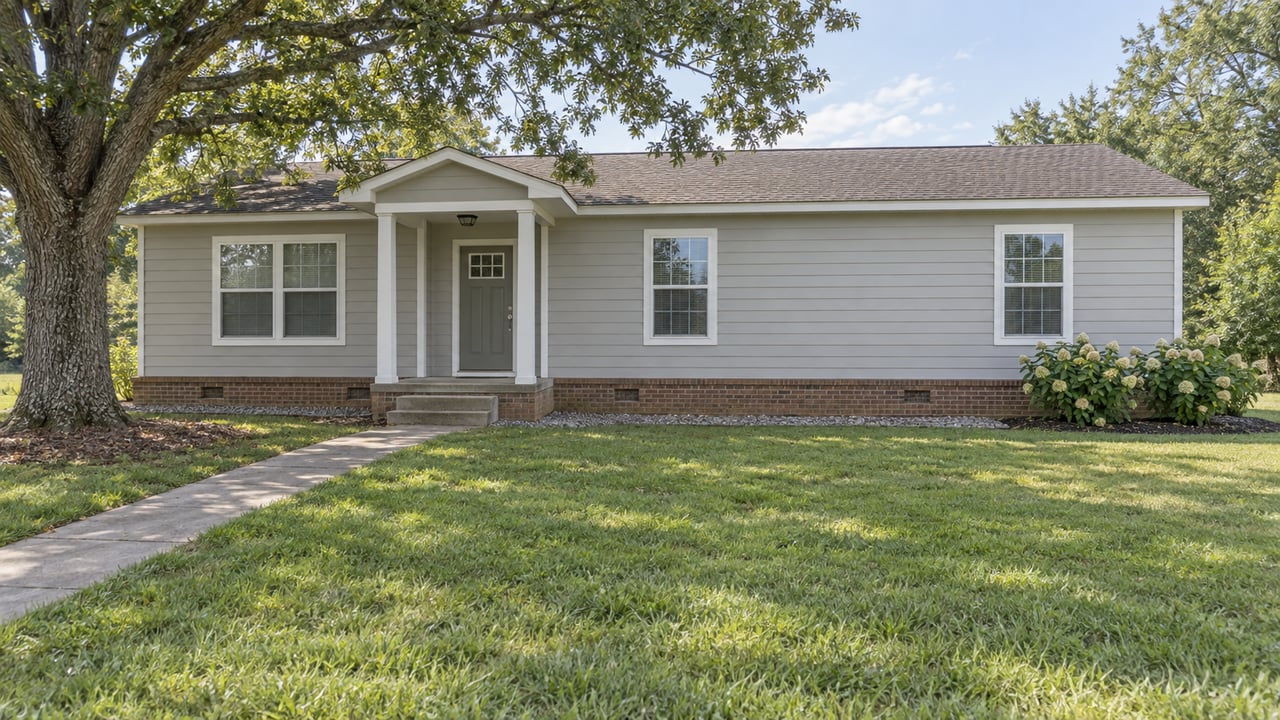
A veteran with full VA entitlement finds a doublewide in Millington priced under $100,000, clean, updated kitchen, a yard big enough for a swing set. The loan officer runs the file and comes back with a no. Not because of the home's age. Not because of its condition. Because of what sits underneath it.
That's the fact most manufactured home shopping in Millington skips past: a VA loan cares less about the house than about who owns the ground it's sitting on. Get that answer wrong before you fall for a listing, and no amount of paperwork later fixes it.
The Line VA Draws Before the Appraisal Even Starts
VA financing only applies to real property. A manufactured home parked on land you lease, whether that's a lot at Shady Oaks or a space in the Shelby Road Mobile Home Park, is classified as personal property under Tennessee law regardless of how nice the home looks or how permanently it appears to sit there. Personal property means a vehicle-style certificate of title, not a deed. VA does not lend against vehicles.
This isn't a condition issue an inspector can fix. It's a structural fact about the transaction. A home in a land-lease community can be immaculate, built last year, HUD-compliant in every respect, and it still won't clear VA underwriting as long as the lot underneath belongs to someone else. Millington has a real concentration of these communities near Naval Support Activity Mid-South, which means a meaningful share of the manufactured housing stock that veteran buyers naturally gravitate toward for price sits on exactly this kind of land.
The homes that do qualify are the ones where the buyer owns or is buying the dirt outright, and where a specific legal conversion has already happened or is about to.
What Actually Has to Happen to the Title
Tennessee doesn't leave this to guesswork. Under state law, a manufactured home stops being a vehicle and starts being real property through a specific filing called an affidavit of affixation. The homeowner surrenders the home's vehicle-style certificate of title, and a licensed preparer records the affidavit with the county register of deeds. That affidavit has to state, among other things, that the home sits on a permanent foundation built to code and that it's permanently connected to septic or sewer along with electricity, water, and gas. A copy goes to the property assessor, because from that point on the home gets taxed like a house, not registered like a car.
Only after that recording is the home legally the same kind of asset as the site-built ranch three doors down. Skip it, and the home stays personal property no matter how solid the foundation looks from the driveway.
The paperwork that converts a manufactured home from a vehicle to a house has a name, a filing office, and a fee schedule. It is not automatic, and it is not optional if a VA loan is the goal.
For VA purposes specifically, that conversion has to clear a few more hurdles. The home needs to have been built on or after June 15, 1976, the date HUD's manufactured housing construction standards took effect. A licensed engineer typically has to certify the foundation, a step that runs $300 to $600 and happens during the appraisal. VA allows exactly one move from the factory to the installation site. A home that's been relocated a second time is one of the most common reasons lenders decline the file outright, appraisal or no appraisal.
Owned Land vs. Leased Lot: What Changes
| Manufactured home on owned land, title converted | Manufactured home on leased lot (land-lease community) | |
|---|---|---|
| VA loan eligibility | Possible, subject to foundation certification and appraisal | Not eligible under VA guidelines |
| Legal classification | Real property, deed and property tax | Personal property, vehicle-style title |
| Financing path if VA doesn't apply | Standard VA process once conversion is recorded | Chattel loan only, typically shorter term and higher rate |
| Who has to act before closing | Buyer or seller completes affidavit of affixation and foundation cert | Nothing converts the title, since the land isn't owned |
The gap between those two columns is the whole story. It's not a matter of degree. A buyer looking at homes in Millington's land-lease communities is looking at chattel financing from the start, full stop, no matter what condition the home is in.
The Chassis Rule Everyone's Talking About Doesn't Touch This
This summer brought the biggest federal shakeup to manufactured housing law in decades. The 21st Century ROAD to Housing Act passed the Senate 85 to 5 and the House 358 to 32, then became law on July 11, 2026, after sitting on the President's desk the full ten days without a signature. Among its provisions, it eliminates the permanent steel chassis requirement that's been part of the federal definition of a manufactured home since the 1970s. The statute now defines these homes as built "with or without a permanent chassis," a change HUD is expected to build labeling and construction standards around over the coming months.
It's a real change, and industry analysts have called it the most consequential shift in manufactured housing policy in fifty years. But it changes how these homes get built, not who owns the land they sit on. Nothing in the law touches Tennessee's affidavit of affixation process, and nothing in it converts a land-lease lot into land the resident owns. A buyer shopping a home in a Millington mobile home park this fall faces exactly the same land-ownership disqualifier for VA financing that existed back in June, before the law passed. The chassis is a manufacturing detail. The lease is a property-rights fact, and federal manufacturing standards don't rewrite state real property law.
What This Means If You're Shopping Near NSA Mid-South
Millington's proximity to Naval Support Activity Mid-South means a steady stream of veteran and active-duty buyers looking for manufactured housing as an affordable entry point. The move that saves the most time isn't touring more homes. It's asking one question before touring any of them: does this home sit on land the seller owns and is conveying with the sale, or is it in a community where the lot is leased?
If the answer is owned land, the next question is whether an affidavit of affixation has already been recorded. If it hasn't, that's a step to plan for, not a dealbreaker, since the foundation certification and filing can typically be completed as part of the purchase process with the right timeline built in. If the answer is a leased lot, the honest move is to redirect the search toward properties where land ownership is part of the deal, since no amount of persistence turns a park-model financing situation into a VA-eligible one.
A few specifics worth confirming before writing an offer on any manufactured home in the area:
- Built on or after June 15, 1976, with HUD certification labels intact
- Currently titled as personal property or already converted to real property
- Foundation permanently affixed, not resting on blocks without footings
- Moved zero or one time since leaving the factory
- Land included in the purchase, not leased separately
None of these are things a listing photo shows. All of them are things a county register of deeds record or a straightforward conversation with the seller can confirm before money changes hands.
A Few Quick Questions
Can a manufactured home in a Millington land-lease community ever qualify for VA financing? Not as long as the land is leased rather than owned. VA guidelines treat land ownership as a baseline requirement, separate from the home's condition or age.
Who pays for the foundation certification, and when does it happen? It's typically ordered during the appraisal process and costs $300 to $600, paid by whichever party the purchase contract assigns it to. It has to be complete before the loan can move to underwriting approval.
Does the new federal chassis rule mean older mobile homes in Millington parks now qualify for VA loans? No. The rule changes how new manufactured homes are built and labeled going forward. It doesn't touch the land-ownership requirement that disqualifies homes in leased-lot communities, and it doesn't retroactively convert any existing home's title status.
Manufactured and land purchases carry more moving parts than a standard resale, and the difference between a smooth closing and a stalled one usually shows up in details like these long before an offer gets written. If you're weighing a manufactured home purchase near Millington and want to talk through what a specific property's land status actually means for your financing, Teresa Ervin Realty is glad to sit down and work through it. Let's Get A Coffee.